In 2014, the FDA had not implemented its food allergy labeling laws. A study evaluated the mental health burden of having celiac disease. Researchers found the mental load of having celiac disease was heavy. The mental burden was similar to those with end stage kidney disease while on dialysis.
Reading labels used to require master’s level knowledge of gluten terms. Labels used to hide what was really gluten and what was not. One would think the improvements in food label laws would have improved mental health burden.
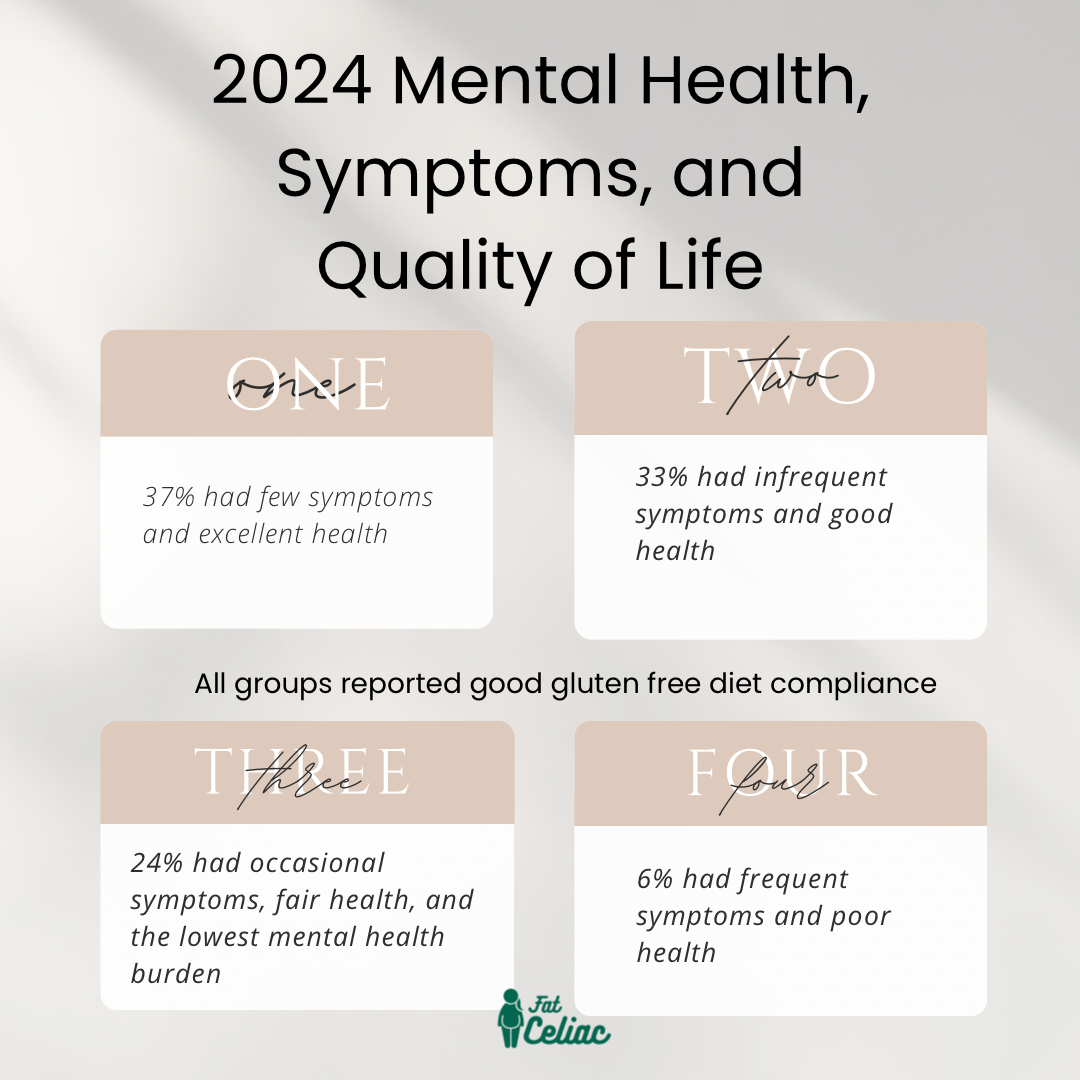
In 2024 researchers used the iCureCeliac database to evaluate the mental and physical load of having celiac disease. Researchers divided patients into four categories:
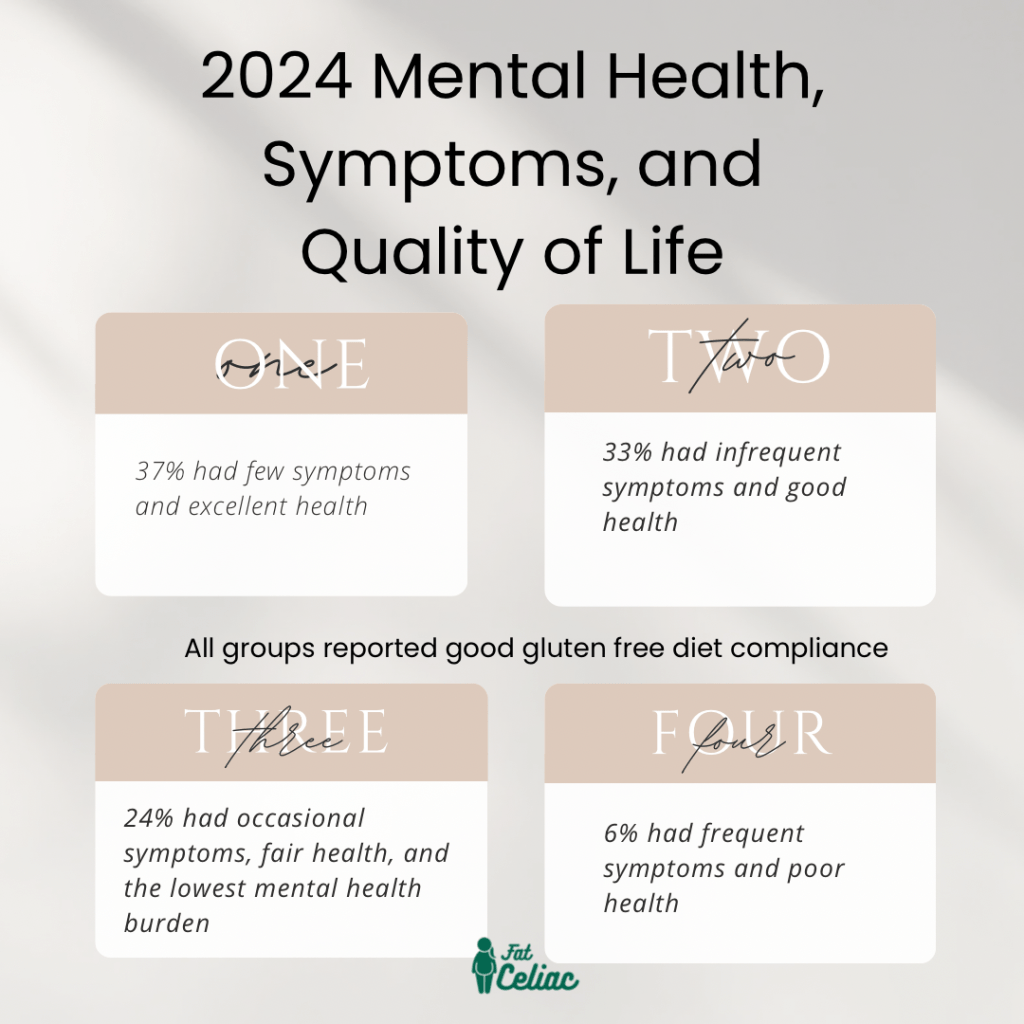
1. Thirty-seven percent had few symptoms and excellent relative health
2. Thirty-three percent had infrequent symptoms and good health
3. Twenty-four percent had occasional symptoms and fair health
4. Six percent had frequent symptoms and poor health.
Profiles varied on anxiety and depression. They also varied on social functioning and sleep. Still, profiles did not vary on adherence to a gluten free diet or quality of life.
Profile 3 (occasional symptoms and fair health) reported the lowest psychological symptoms and the highest quality of life. Odd, because this is one of the sicker cohorts in the study.
How do you feel your quality of life is impacted by your celiac diagnosis? What group would you put yourself into?

Leave a Reply