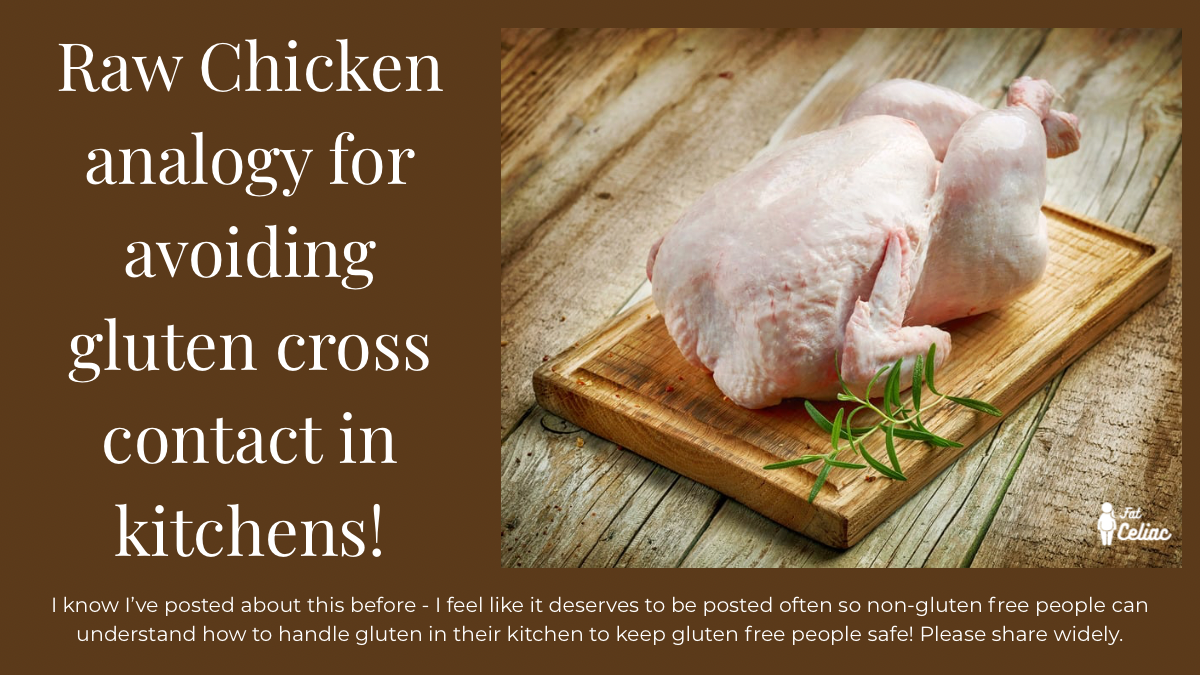
We always struggle to explain cross contact in the kitchen. Here’s the best way I’ve found: treat gluten like raw chicken. The same simple, non-negotiable rules that keep us safe from foodborne illness also keep people with celiac disease safe from gluten.
Why this analogy works
When I learned to cook, my mom drilled raw chicken safety into me. It can make you sick; here are the rules. The very same mindset protects against gluten cross contact. If you’ve ever kept raw chicken away from ready-to-eat foods, you already understand the core of gluten-free kitchen safety.
If you’re new to celiac disease, start with my primer on setting up a safer kitchen, and learn why “trace amounts” matter in the legal definition of gluten-free.
The raw chicken rules—applied to gluten cross contact
1) Wash your hands—thoroughly
After handling raw chicken, I wash with the hottest water I can stand and plenty of soap. Same with gluten-containing items: wash hands well after touching gluten so you don’t transfer tiny amounts to gluten-free foods.
2) Wash anything that touched gluten
Anything that touches raw chicken gets washed in very hot, soapy water (or the dishwasher). Apply the same rule to gluten contact. My caveat: use a paper towel—not the community sponge—for wipe-downs so you don’t turn the sponge into a gluten delivery device. Then toss the paper towel.
3) Protect the countertops
We never park raw chicken on the bare counter. With celiac, don’t put utensils or cooked gluten items directly on the counter. Put a clean plate, a piece of foil, parchment, or a spoon rest underneath.
4) Clean surfaces even if you “didn’t see anything”
Just like invisible raw chicken drips, gluten crumbs and dust travel. Wipe counters with hot, soapy water and a disposable towel. This simple step prevents cross contact you’ll never see coming.
5) Do gluten-free prep first—then gluten
Cut raw vegetables before raw chicken so you can’t contaminate them. In the same way, prep and cover gluten-free foods first, then handle gluten items. This order-of-operations is one of the cheapest, easiest protections you have.
Teaching family and friends
I tell people: handle gluten like raw chicken. Drops, dust, and crumbs can get everywhere—and they can make us sick. If they want a deeper dive, send them to:
- Why food-handler training matters (a real-world policy win).
- What everyday exposures look like (the kissing study everyone asks about).
- Why “enzyme safety nets” aren’t the answer.
For big picture thinking about low-level exposure, see my piece on the “clinical trial effect” and why controlling small exposures matters.
Quick cross contact checklist
- Hands: Hot water + lots of soap after touching gluten.
- Tools: Separate or thoroughly washed knives, boards, tongs, spatulas.
- Surfaces: Wipe with hot soapy water using paper towels, then toss.
- Order: Prep gluten-free foods first; cover them.
- Countertops: Never rest gluten or utensils directly on bare surfaces.
- Storage: Label and separate gluten-free shelves/bins where possible.
Quick note on terminology
You’ll see me use cross contact (not “cross contamination”). Contamination is about bacteria and spoilage; contact is about tiny amounts of gluten ending up in food that should be gluten-free. The distinction helps others take our needs seriously and use the right safety steps.
Want more practical kitchen safety tips? Explore Kitchen Safety and Cross Contact.
#glutensensitivity #glutenfreerecipes #glutenfree #celiacdisease #celiac
Make a one-time donation
Make a monthly donation
Make a yearly donation
Choose an amount
Or enter a custom amount
Your contribution is appreciated.
Your contribution is appreciated.
Your contribution is appreciated.
DonateDonate monthlyDonate yearly
Leave a Reply