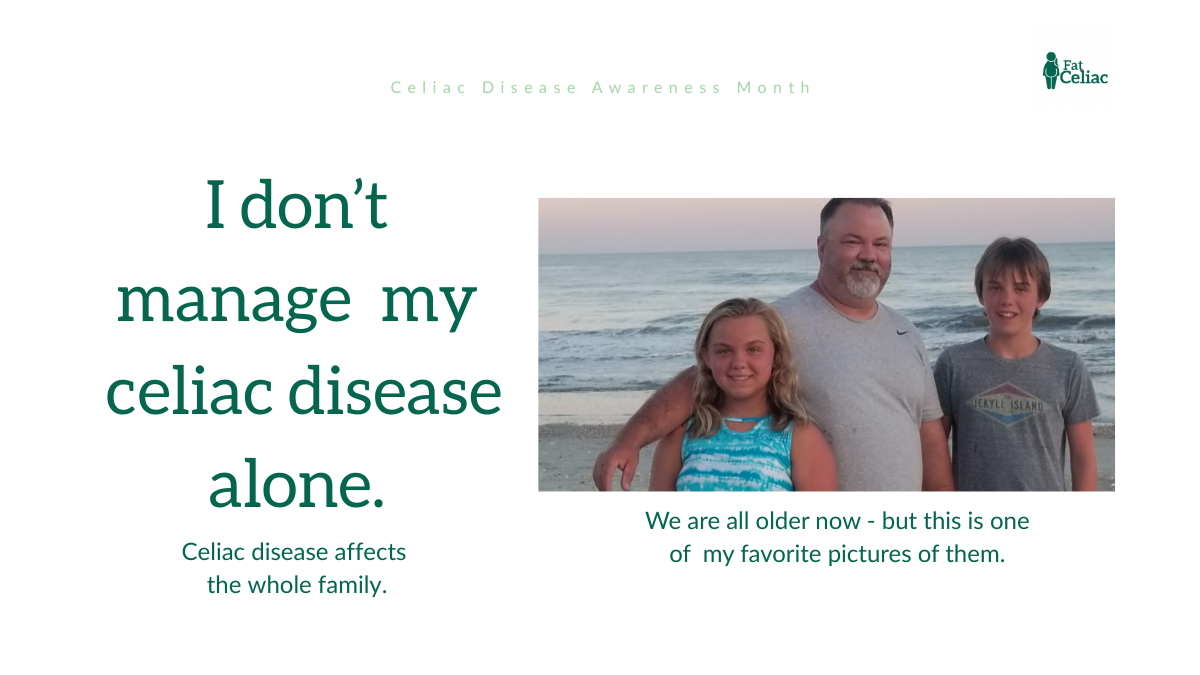
Celiac disease is never managed by just one person — it impacts everyone in their lives.
My son has been away at college for a year. He does not have celiac disease and does not carry the genetic markers for it. My daughter is still at home entering her senior year — same story, no genetic markers.
As they go out into the world, they will not have to think about celiac disease the way I do. They will not have to read every label, navigate cross contact, or mentally calculate risk every time food is involved.
But they grew up in a house with celiac disease.
They learned to read labels before most kids knew what ingredients were. They learned how to protect against cross contact. When they were little, they would ask, “Mommy, are you sure that is gluten free?”
They’ve seen the hard parts of celiac disease. The exhaustion. The frustration. The isolation at times. The ways this autoimmune disease can quietly reshape daily life.
But I also hope they saw something else.
I hope they saw that celiac disease did not stop me from living my life.
It may have changed how we traveled, celebrated birthdays, ate out, or gathered with friends and family — but we still did those things. We still built a life. We still found joy.
Do I secretly hope one of them grows up to become a world-class celiac researcher? Absolutely.
But more than that, I hope growing up beside celiac disease made them kinder, more adaptable, more resilient, and more compassionate toward people carrying burdens others cannot always see.

Leave a Reply