


Celiac disease should heal in 1 year on a strict gluten-free diet. If it does not heal, it is considered refractory celiac disease. My celiac disease took longer than a year to heal. It took about four years, to be exact, but I was never diagnosed with refractory celiac disease. I know many of us have the same issue – a really long time in healing. Most of us get there, but it can take longer than a year.
There are two types of refractory celiac disease – Type 1 and Type 2. The types are distinguished by the number of abnormal intraepithelial lymphocytes. If fewer than 20% of the intraepithelial lymphocytes are abnormal, Refractory Celiac Disease Type 1 (RCD1) is diagnosed. If greater than 20% are abnormal, Refractory Celiac Disease Type 2 (RCD2) is diagnosed.
RCD2 is closely associated with Enteropathy Associated T-Cell Lymphoma (EATL). Many people call this “celiac cancer”. EATL has a median survival time of 6 months from diagnosis. Fewer than 1 in 200 celiac patients are diagnosed with RCD2. RCD2 risk is highest in men, diagnosed with celiac disease after age 65.
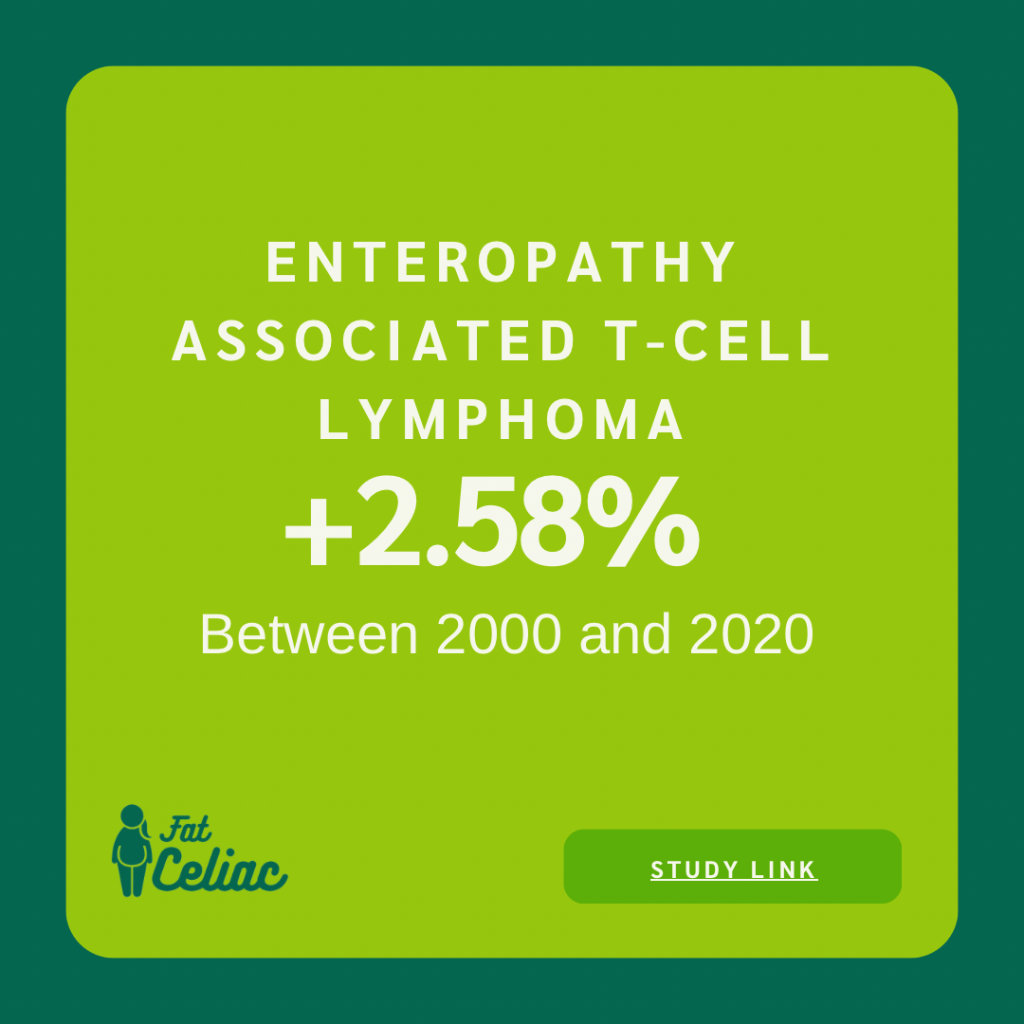
Why am I talking about this? A study just came out demonstrating a 2.58% increase in EATL diagnosis between 2000 and 2020. Link to study – https://loom.ly/sopuJ9I
Could this be a proportional rise in EATL as celiac disease is diagnosed more often?
I think many celiac patients rely on a lot of processed gluten free foods as they have become more abundant. I love that we have more choice. But I also worry that a dependence on gluten free convenience foods hurt our health.
What do you think may be contributing to the rise in EATL?