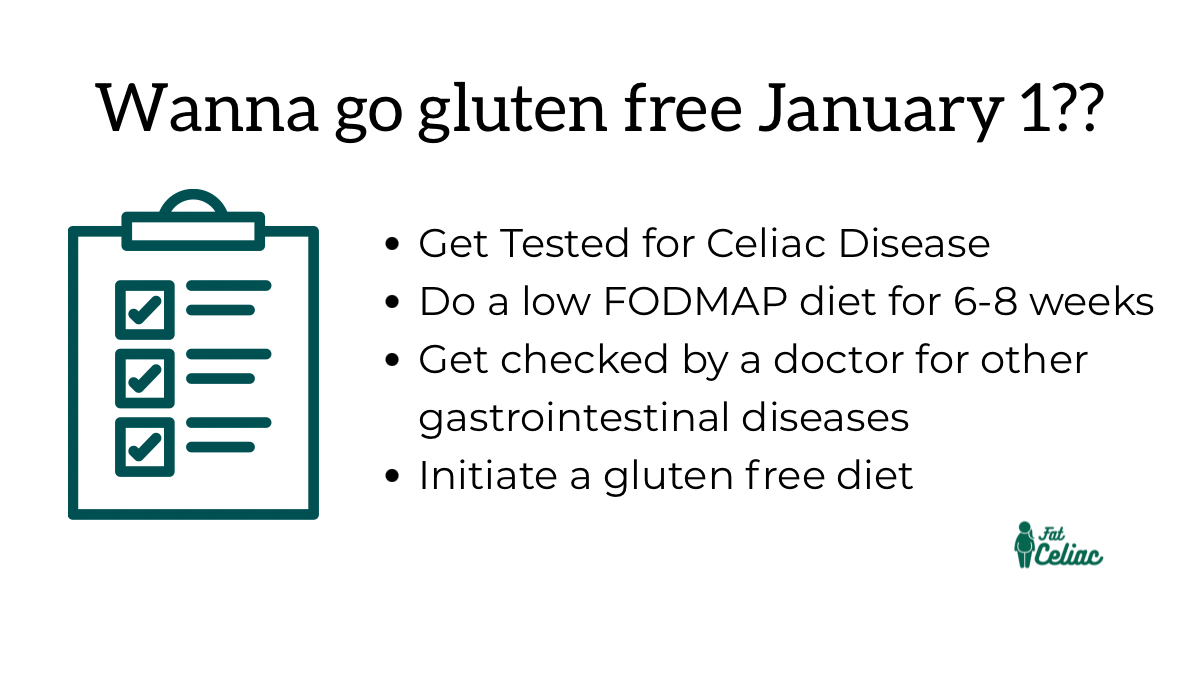
Every January, I see friends and family announce they’re “going gluten-free” as part of a fresh start.
Before you remove gluten from your diet completely, there are a few important steps that can save you time, frustration, unnecessary restrictions, and missed diagnoses.
Step 1: Get Tested for Celiac Disease
This step is critical.
To be accurately tested for celiac disease, you must still be consuming gluten. Once gluten is removed from your diet, testing becomes unreliable and often requires a difficult and uncomfortable gluten challenge to redo.
You do not need a doctor’s appointment to begin testing. You can:
- Schedule testing directly through LabCorp or Quest (ask for a Celiac Panel with reflex)
- Use an at-home screening test like Everlywell
The Everlywell test is not perfect, but it can provide helpful insight into whether celiac disease may be contributing to your symptoms. If you receive a positive result, that is your signal to follow up with a physician for further evaluation.
👉 Everlywell Celiac Screening Test
Disclosure: I earn a small commission if you purchase through this link. First-time Everlywell customers receive 15% off.
Step 2: Try a 6–8 Week Low FODMAP Diet
Many people blame gluten for digestive symptoms when gluten may not actually be the problem.
FODMAPs (fermentable oligosaccharides, disaccharides, monosaccharides, and polyols) are short-chain carbohydrates that are poorly absorbed in the small intestine. They commonly cause symptoms such as bloating, abdominal pain, gas, and diarrhea.
Gluten is a protein, not a FODMAP. However, many gluten-containing grains are high in fructans, which are a high-FODMAP carbohydrate.
This explains why many people feel better when they remove gluten — the symptom relief may actually be coming from reduced FODMAP intake, not gluten elimination itself.
A structured 6–8 week low FODMAP diet can significantly reduce symptoms for many people and, in some cases, eliminate the need to go gluten-free entirely.
Monash University is considered the definitive authority on the low FODMAP diet and offers evidence-based education, food lists, and tools to help you get started.
Click here for Monash University -> https://www.monashfodmap.com/ibs-central/i-have-ibs/starting-the-low-fodmap-diet/
Step 3: See a Doctor
Digestive symptoms are not exclusive to celiac disease.
Conditions such as:
- Crohn’s disease
- Eosinophilic esophagitis
- Diverticulitis
- Gastritis
- Ulcers
- Other gastrointestinal disorders
can all produce symptoms similar to celiac disease. A physician can help rule out these conditions and ensure nothing more serious is being overlooked.
Step 4: Start a Gluten-Free Diet (If You Still Need To)
If you reach this step, it’s important to go in with clear expectations.
A gluten-free diet:
- Is often low in fiber, B vitamins, and key micronutrients
- Requires careful planning to avoid nutritional deficiencies
- Costs more — often twice the price for half the food
- Can be socially isolating and occasionally invite unwanted commentary
The healthiest and most affordable way to eat gluten-free is to focus on foods as close to nature as possible: whole foods, naturally gluten-free ingredients, and simple preparation.
If you need help, I’m happy to help you navigate this journey — but I also want to make sure you are prepared for what this lifestyle actually requires.
Going gluten-free is a medical decision for many people. Starting the right way matters.

Leave a Reply