


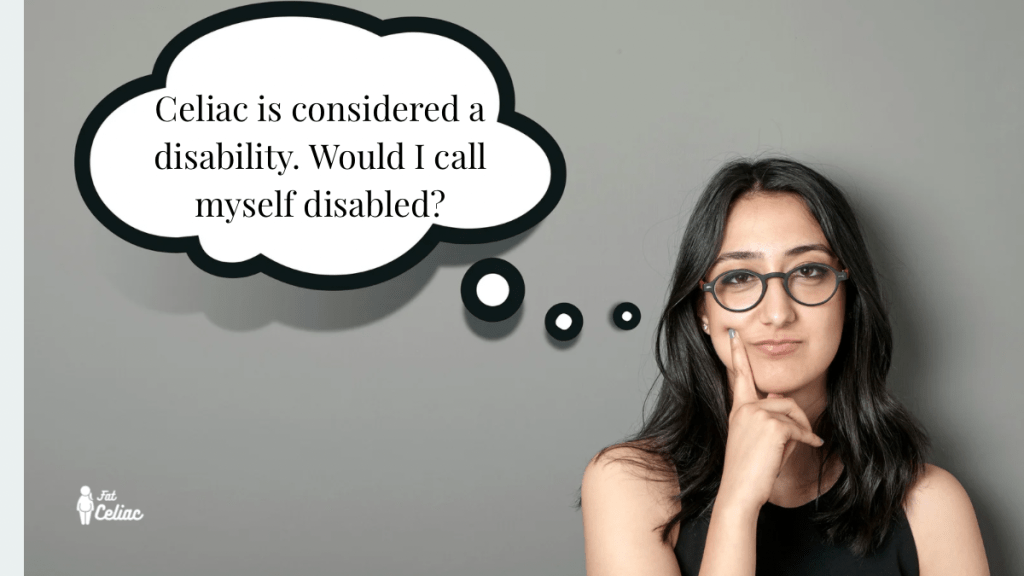
Is Celiac Disease a Disability? Living with an Invisible Illness
This morning, I saw a post in one of the big celiac groups announcing a discussion about celiac disease as a disability. The topic caught my attention—not because it focused on legal rights, but because it explored coping with celiac as an invisible disability.
I love the idea of a supportive conversation about the daily challenges of living with celiac. After all, that’s something I try to foster every day. But here’s the thing: I struggle with calling celiac a disability.
Legally speaking, according to the Americans with Disabilities Act (ADA), celiac disease is considered a disability. The ADA provides certain protections, which I’ll cover in a future post, but they don’t extend to things like bringing outside food into restaurants.
Personally, I’ve never thought of myself as disabled. I can do everything everyone else can—I just can’t eat gluten. Yes, it can be inconvenient and even interfere with daily life, but for me, that doesn’t feel the same as being disabled.
Working at a school for children and young adults with special needs gives me perspective. Our students have disabilities ranging from high-functioning autism to severe, profound impairments. Calling celiac patients “disabled” feels disrespectful to the reality of their experiences.
That said, I am grateful for the limited protections under the ADA. They are important, and we need them. But as a community, we need to ask: Should we call ourselves disabled?
Recommended Further Reading on FatCeliac.net
- “ADA and Celiac” — A multipart series beginning with the landmark 2012 Lesley University case, where the DOJ ruled that celiac disease qualifies as a disability and required university dining halls to provide allergen‑free accommodations when meal plans were mandatory fatceliac.net+6fatceliac.net+6fatceliac.net+6.
- “Wrapping Up ADA and Celiac…” — A comprehensive follow‑up covering cases such as Rider University and the Williamsburg field trip incident, exploring how ADA protections apply—and where interpretation remains uncertain—around mandatory meal plans, schools, and limitations on restaurant obligationsfatceliac.net+3fatceliac.net+3fatceliac.net+3.
Make a one-time donation
Make a monthly donation
Make a yearly donation
Choose an amount
Or enter a custom amount
Your contribution is appreciated.
Your contribution is appreciated.
Your contribution is appreciated.
DonateDonate monthlyDonate yearly