
Candidates want to talk about grocery prices. Fair enough. I’d like to talk about what’s on the grocery label.
For people with celiac disease, buying food can mean reading every ingredient, recognizing that malt may come from barley, and deciding whether the information on a package is enough to make a safe choice. Picking up a medication can start another round of research.
Those are everyday problems. They are also policy problems.
Right now, four bills in Congress address pieces of the information people with celiac disease need:
- The Celiac Safety Act of 2026 would add gluten-containing grains to the federal definition of a major food allergen.
- The FASTER Act of 2026 proposes food-labeling changes and would require a federal report on celiac disease, including gaps in diagnosis and research. Its inclusion of oats deserves careful discussion.
- The Food Labeling Modernization Act of 2026 is a broader labeling bill with provisions for disclosing gluten-containing grains.
- The ADINA Act would require disclosure when ingredients in medications are derived from major food allergens or gluten-containing grains.
These bills differ in scope and wording. You can read my breakdown of all four bills before deciding which provisions you support. The point today is simpler: the people asking for our votes should know these issues exist.
Ask the question
At a candidate forum, a town hall, or a campaign stop, ask:
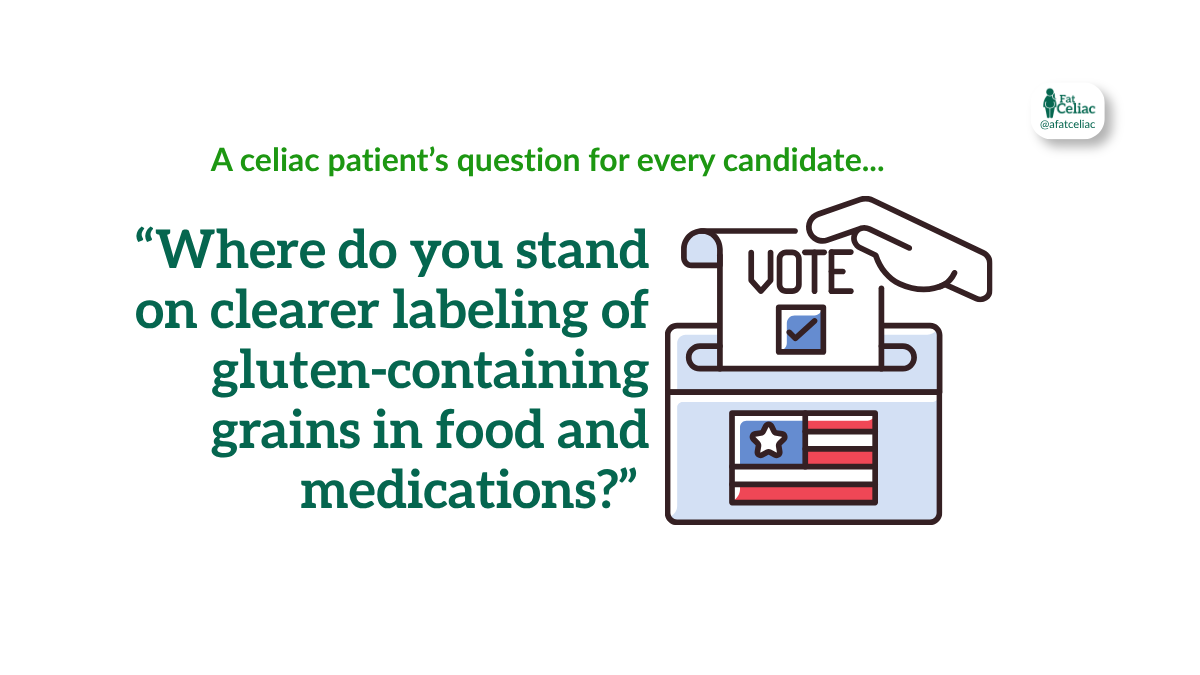
Where do you stand on clearer labeling of gluten-containing grains in food and medications?
Then make it personal. Tell them about the food label you had to decipher. Tell them about the prescription that sent you searching for ingredient information. Explain why “just don’t eat gluten” is inadequate advice when the information you need is hard to find.
Ask an incumbent what they’ve done. Ask a challenger what they would do. If they don’t know about the bills, give them the names and ask for a response after they’ve looked into them.
You do not have to give a speech or know every section of federal food law. You can ask one clear question about a problem you live with.
Make celiac disease part of the conversation
Politicians hear about the issues their constituents raise. Grocery prices matter to us. So does being able to tell what’s in the groceries and medications we buy.
We have four concrete proposals to discuss. Let’s use them to start conversations with the people who want to represent us.
Have you asked a candidate or elected official about celiac disease? Tell me what they said.
Want to know what each proposal would actually change? Read my breakdown of the four celiac-related bills in Congress, including the important differences between them and the debate over oats in the FASTER Act.
Leave a Reply