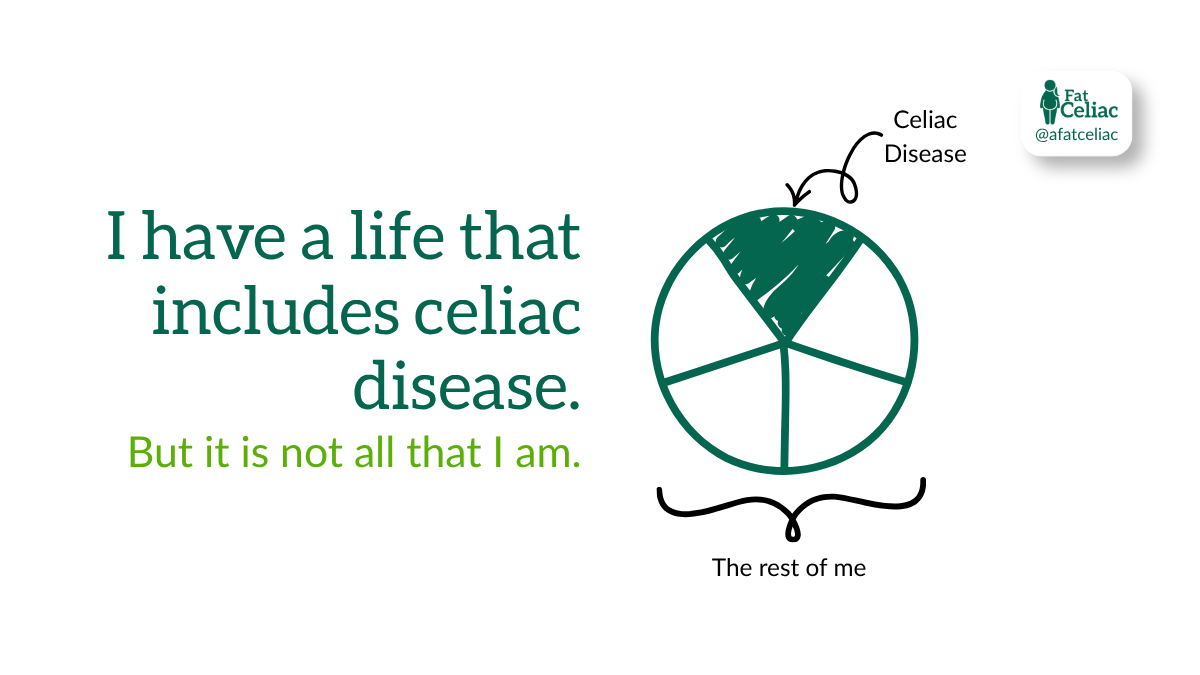
I Have a Life That Includes Celiac Disease
At some point, celiac disease stopped feeling like something I was constantly managing.
Not because it went away.
Because it became part of how my brain works.
Celiac disease affects what I eat, where I eat, how I travel, what I buy, and a hundred tiny decisions I barely notice anymore.
But I do not experience every one of those choices as a celiac decision.
That took time.
The Flour Tortilla Moment
A while ago, I was shopping for a camping trip I wasn’t even going on.
I was buying food for the people who were going, including burrito supplies.
And I had to consciously remind myself to buy flour tortillas.
Not gluten-free tortillas.
Regular flour tortillas.
That sounds ridiculous.
But it stopped me for a second because gluten-free thinking has become so ingrained that “what can I safely eat?” is basically the default setting in my brain.
I wasn’t shopping for myself.
I wasn’t going on the trip.
Nobody eating those tortillas had celiac disease.
And my brain still defaulted to gluten free.
That is how deeply celiac disease has worked its way into the ordinary mechanics of my life.
At First, Every Decision Feels Like a Celiac Decision
When you’re newly diagnosed, celiac disease can feel enormous.
Everything requires thought.
The grocery store takes forever.
You read every label.
Then you read it again.
Restaurants require research.
Travel requires planning.
You start thinking about cutting boards, fryers, shared kitchens, medications, family gatherings, school, work, and things you never imagined would involve gluten.
It can feel like celiac disease is suddenly everywhere.
Because, in a way, it is.
Not because your entire life is about celiac disease.
Because you haven’t yet built the systems that make managing it automatic.
Then Something Changes
Over time, you learn.
You learn which foods are naturally gluten free.
You learn how to read labels faster.
You learn which questions matter at restaurants.
You learn what your household needs to function safely.
You learn what you need to pack when you travel.
You learn when to ask another question and when to walk away.
You build routines.
And eventually, many of those decisions stop requiring the same amount of conscious thought.
I still read the label.
I still think about cross-contact.
I still check the fryer.
I still plan ahead.
But those things do not necessarily feel like separate celiac tasks anymore.
They are simply part of how I move through the world.
Celiac Disease Still Gets a Vote
None of this means celiac disease became unimportant.
It is a meaningful part of my life.
It still affects where I eat.
It affects what I buy.
It affects travel.
It affects social situations.
Sometimes it changes plans.
Sometimes it costs more.
Sometimes it is frustrating.
Sometimes it is exhausting.
Celiac disease still gets a vote.
Sometimes a very loud one.
But it does not get to be my entire identity.
That distinction matters to me.
I Am More Than the Disease I Manage
I am a person who happens to have celiac disease.
I also have work.
Family.
Friends.
Things I enjoy.
Things I am good at.
Things I am bad at.
Things I worry about that have absolutely nothing to do with gluten.
A life.
Celiac disease is woven into that life, but it is not the whole fabric.
And I think that can be difficult to imagine when you’re newly diagnosed.
At first, everything is celiac.
Every meal is a decision.
Every mistake feels enormous.
Every outing requires planning.
It is easy to wonder whether life will always feel that consumed by the disease.
For many of us, it doesn’t.
The disease doesn’t disappear.
The work doesn’t disappear.
But experience changes the weight of it.
Experience Does Not Mean Carelessness
I want to be clear about this.
Becoming more comfortable with celiac disease does not mean becoming less careful.
It means many of the precautions become habits instead of emergencies.
You do not stop checking.
You get faster at checking.
You do not stop thinking about risk.
You become better at recognizing it.
You do not stop advocating for yourself.
You become more comfortable doing it.
That is very different from ignoring the disease.
It is integration.
Maybe This Is Part of Celiac 201
We’ve talked recently about moving beyond simply learning the rules of celiac disease.
Celiac 101 teaches us what the rules are.
Celiac 102 teaches us how to use them in the real world.
And maybe part of Celiac 201 is this:
Learning how to let celiac disease become part of your life without allowing it to become the definition of your life.
That requires experience.
Judgment.
Confidence.
And sometimes simply enough repetition that buying the gluten-free tortillas becomes so automatic you have to remind yourself that the people going camping can eat the regular ones.
A Life That Includes Celiac Disease
I do not want celiac disease.
If somebody offered to take it away tomorrow, I would happily hand it over.
But it is part of my life.
It has shaped some of my habits.
It has changed how I think about food.
It has made certain decisions automatic.
And somewhere along the way, it stopped feeling like a separate thing I manage every minute of every day.
It simply became part of me.
A meaningful part.
But still only a part.
I have a life that includes celiac disease.
It is not all that I am.
Has celiac disease become more automatic for you over time, or does it still feel like something you have to consciously manage every day?
If you’re newly diagnosed, start with Read Before You Eat and the Fat Celiac resources. As you get more comfortable living gluten free, learning which questions matter at restaurants and how to think realistically about cross-contact and actual versus theoretical risk can make everyday decisions easier. I’ve also written about the rules of living with celiac disease and what can happen when reasonable vigilance begins turning into fear. All of these are pieces of the same bigger question: how do we protect our health without allowing celiac disease to become our entire life?
Leave a Reply